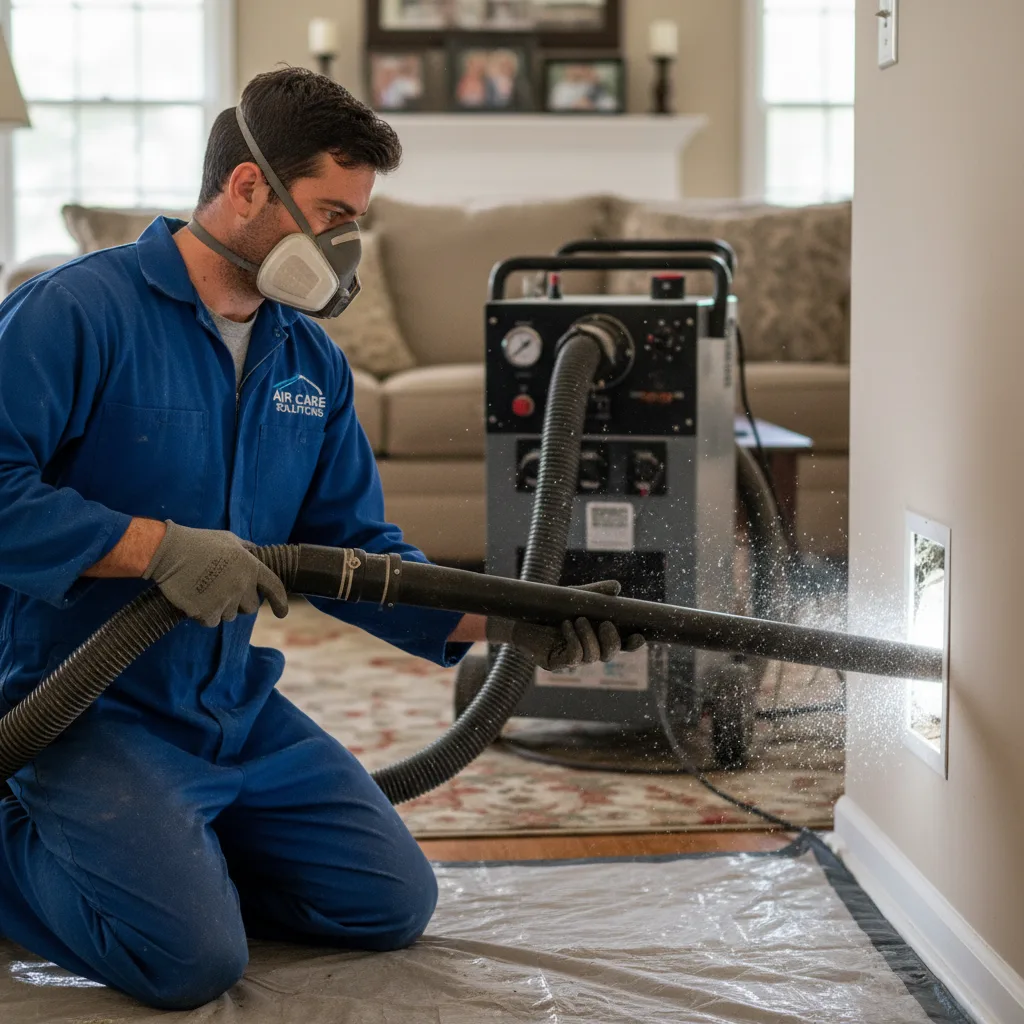
According to the EPA, indoor air can be 2–5 times more polluted than outdoor air — even in cities with serious air quality problems. And unlike outdoor pollution, indoor air quality is something you can actually control. The single biggest variable most homeowners overlook? Their air duct system. Every time your HVAC runs, air passes through your ductwork and distributes whatever's accumulated there throughout your entire living space.
This checklist walks you through 10 warning signs of poor indoor air quality, explains what's actually living in dirty ducts, and tells you what to do about it. Want your risk level scored automatically? Take our free Air Quality Quiz — it takes 2 minutes and gives you a personalized risk score with recommended next steps.
10 Signs Your Home's Air Quality May Be Compromised
Score yourself: check every item that applies to your home. The more you check, the higher your risk — and the more urgently your ducts need attention.
-
Dust builds up fast — surfaces are dusty again within days of cleaning.
Fast-returning dust is a classic sign that your HVAC system is redistributing accumulated debris. Your ducts may be acting as a dust factory. -
Musty, stale, or "dirty sock" odor when the HVAC turns on.
This is often mold or mildew inside the duct system or on the evaporator coil. It's not harmless — mold spores circulate throughout the house every time the system runs. -
Allergy or asthma symptoms spike when you're indoors — and improve when you leave.
If symptoms are worse at home than outside, indoor air quality is almost certainly the issue. Contaminated ducts are a primary suspect. -
Airflow is uneven — some rooms are noticeably harder to heat or cool.
Blockages and debris in ductwork restrict airflow to specific zones. This is a comfort issue and an air quality issue simultaneously. -
Your energy bills have risen without a clear reason.
Restricted airflow makes your HVAC work harder to maintain temperature. Contaminated ducts reduce efficiency and increase energy costs by an estimated 10–25%. -
Your home recently underwent renovation or construction work.
Drywall dust, sawdust, and construction particulate infiltrate ductwork during renovation. Post-renovation duct cleaning is almost always warranted. -
Your home is more than 20 years old and ducts have never been cleaned.
Twenty-plus years of accumulated dust, insulation fibers, and biological growth is the norm in older homes with no cleaning history. This is a guaranteed issue. -
You have one or more pets that shed hair or dander.
Pet hair and dander are continuously pulled into your return air grilles and deposited throughout your duct system. Homes with shedding pets have significantly higher contamination levels. -
Your home has high humidity — above 50% regularly.
Humidity above 50% creates ideal conditions for mold and dust mite proliferation inside ductwork. Basements, bathrooms, and tropical/southern climates are high-risk zones. -
Your ducts have never been professionally cleaned — or you don't know when they were last cleaned.
If you can't remember when it happened, it's been too long. This applies to both new homeowners who inherited an unknown history and long-term owners who've never scheduled it.
Quick score: Checked 3–4 items? Your air quality risk is elevated. Checked 5+? You're very likely living with compromised indoor air right now. Get your full Air Quality Score →
What's Actually Living in Your Dirty Ducts
The reason duct contamination matters isn't just abstract — it's the specific biological and particulate material that accumulates over time. Here's what professional duct cleaners routinely find in neglected systems:
Dust Mites and Their Waste
Dust mites thrive in ductwork, feeding on dead skin cells that accumulate in the dust layer inside your ducts. Their fecal matter and body fragments are one of the most common indoor allergens — and they're effectively distributed by your HVAC system every time it cycles. Homes with carpet, fabric furniture, and pets have significantly higher dust mite populations.
Mold Spores
Wherever moisture meets dust, mold can grow. Ductwork near poorly insulated sections, in humid basements, or downstream of a leaking evaporator coil provides ideal conditions for mold colonization. Once established, mold spores are continuously distributed throughout the home. Read: Air Duct Cleaning and Mold — What You Need to Know.
Pet Dander and Hair
Unlike larger pet hair that you can vacuum up, microscopic pet dander (tiny skin flakes) passes straight through many air filters and accumulates in ductwork. It's a potent allergen even in small quantities and persists in the duct environment for months.
Pollen
Pollen enters homes through doors, windows, and the HVAC system itself (especially through outdoor air intakes). It accumulates in ductwork and is redistributed seasonally — creating indoor allergy seasons that can last well beyond outdoor pollen peaks.
Bacteria and VOCs
Bacterial colonies can establish in moisture-laden duct sections, particularly near the air handler. Some produce volatile organic compounds (VOCs) that contribute to the "HVAC smell" many homeowners notice. In severe cases, this represents a genuine health risk for immunocompromised residents.
What to Do If You Scored High on Risk
If your checklist score is 4 or higher, here's the sequence of actions to take:
- Get an inspection first. Many reputable contractors offer free or low-cost duct inspections with a camera system. This tells you whether you have mold, heavy debris, or structural issues before committing to a cleaning.
- Prioritize your filter. While scheduling a cleaning, upgrade to a MERV-11 or MERV-13 filter and replace it monthly for the first 3 months. This immediately reduces the particulate load circulating in your home.
- Address humidity. If humidity is above 55%, add a dehumidifier before cleaning ducts — otherwise contamination will recur quickly. A whole-home dehumidifier attached to the HVAC system is the most effective solution.
- Get 3 quotes and verify credentials. Use our Quote Comparison Tool to evaluate bids and our quote comparison guide to spot red flags before hiring.
- Book the cleaning and document it. Keep a record of the date, company, and scope. This establishes your baseline for future cleanings and is valuable for home resale.
Get Your Personalized Air Quality Score
Our free Air Quality Quiz scores your home's risk level across 10 factors and tells you exactly what to prioritize — in under 2 minutes.
Take the Free Air Quality Quiz →Related Guides
- Air Duct Cleaning for Allergy Sufferers
- Air Duct Cleaning and Mold: What to Know
- 7 Signs Your Air Ducts Need Cleaning
🏢 Are You a Duct Cleaning Contractor?
Automate your follow-ups, quotes, and review requests with GoHighLevel — purpose-built for HVAC and duct cleaning businesses.
GoHighLevel for HVAC Businesses → Professional Quoting Software →