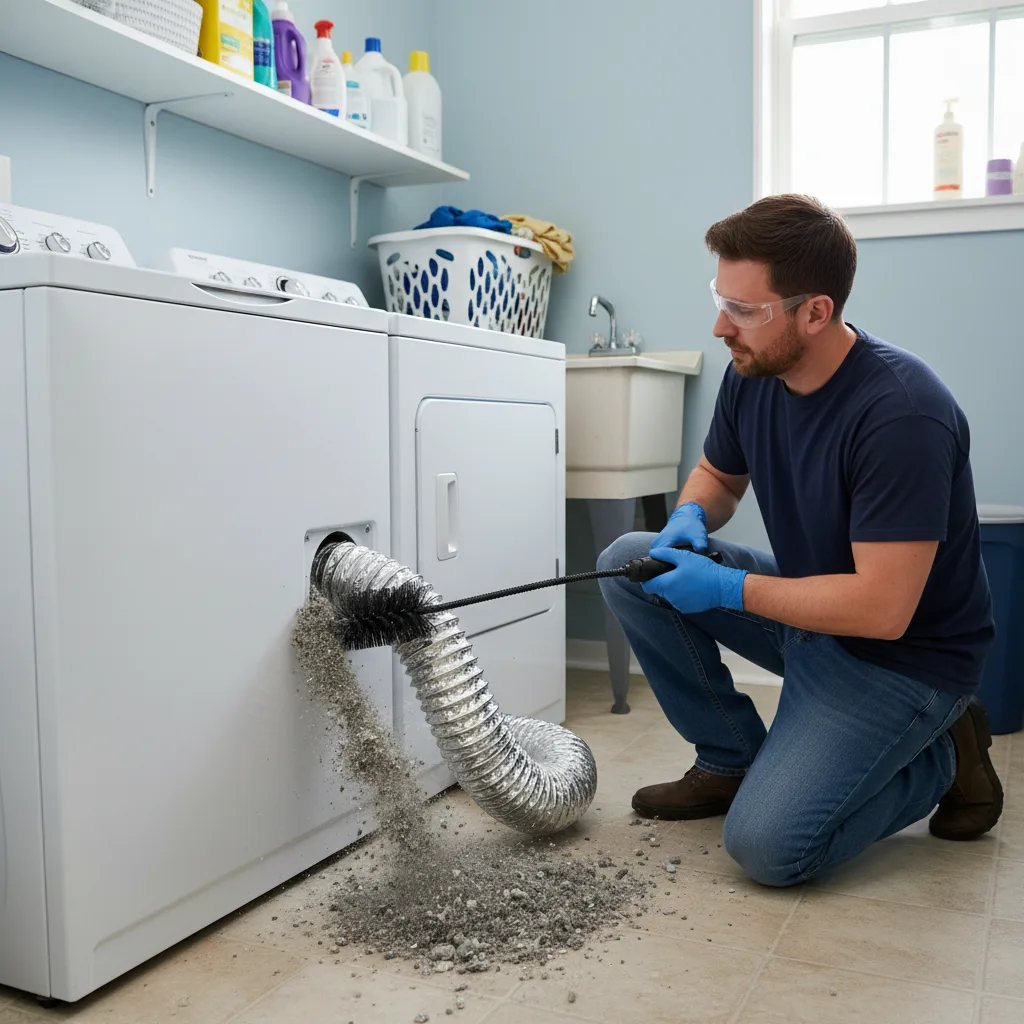
Clogged dryer vents cause 2,900+ house fires per year in the US. Warning signs: clothes taking longer than one cycle to dry, dryer feels hot to the touch, burning smell during operation, visible lint around the exterior vent. Clean your dryer vent annually and replace foil or plastic vents with rigid metal ones to reduce fire risk.
Get Your Free Dryer Vent Cost Estimate
Enter your home size and location for an instant 2026 price range.
The Numbers Are Staggering
According to the U.S. Fire Administration, dryer fires cause approximately 2,900 house fires per year, resulting in an estimated 100 injuries and $35 million in property loss. The leading cause of these fires is failure to clean dryer vents — specifically, lint accumulation in the vent ductwork.
The risk isn't limited to fire, either. A clogged dryer vent:
- Makes your dryer work 2-3x harder, cutting its lifespan significantly
- Can void the dryer's manufacturer warranty if lint damage is traced to poor maintenance
- Causes excess moisture that can lead to mold in the vent ductwork
- Uses substantially more electricity — a clean dryer vent dries a full load in about 45 minutes; a clogged one can take 90 minutes or more
The two most dangerous materials in your dryer vent:
1. Lint — Extremely flammable, and it accumulates every single time you run the dryer. More dangerous: the fine lint that escapes the filter meshes in the vent ductwork, not the lint caught in the lint trap.
2. Flexible foil duct tubing — The accordion-style duct connecting your dryer to the wall vent. Lint catches in every ridge of this tubing and is nearly impossible to clean thoroughly. Building codes in many jurisdictions have banned flexible foil duct for this reason — rigid metal or semi-rigid duct is strongly preferred.
The Warning Signs Your Dryer Vent Is Dangerous
Your dryer will tell you when the vent is starting to clog. Most people dismiss these signals:
- Clothes take more than one cycle to dry. A full load of laundry should dry in 45-55 minutes. If it takes 70-90 minutes, your vent is impeding airflow.
- The dryer feels dangerously hot on the outside. A properly functioning dryer gets warm but not hot. If the cabinet is hot to the touch or you can feel heat radiating from the dryer room, stop using it immediately.
- A burning smell when the dryer runs. This is the most urgent warning sign. Lint has already begun to char. Stop the dryer, unplug it, and have the vent inspected before running it again.
- The laundry room is unusually humid. When the vent is clogged, moisture has nowhere to go. The room stays damp and you may notice condensation on walls or windows.
- Visible lint accumulation around the lint trap area. If you can see lint accumulating around the dryer itself, more lint has escaped past the filter and is building up in the vent.
- The outdoor vent flap doesn't open fully. Go outside when the dryer is running and check the vent. If the flap barely moves or stays closed, airflow is restricted and lint is accumulating inside.
Dryer Vent vs. Air Duct Cleaning: Not the Same Thing
This is one of the most common confusions in home HVAC maintenance. These are two completely separate systems:
| Dryer Vent | HVAC Air Ducts | |
|---|---|---|
| Connects | Dryer to exterior wall | HVAC unit to every room |
| Function | Expels heat + moisture from dryer | Circulates conditioned air |
| Fire risk | High when clogged | Minimal |
| Cleaning recommendation | Once a year minimum | Only when visibly contaminated |
| Industry fraud level | Low | High |
| Dangerous materials | Lint (extremely flammable) | Dust, debris (low flammability) |
The confusion is understandable — both involve ductwork, and both are marketed aggressively. But they're not the same, and a company that tries to upsell you from dryer vent cleaning to air duct cleaning during the same visit is using a standard pressure tactic. See our scam guide for how to avoid this.
How to Clean a Dryer Vent: DIY vs. Professional
DIY Cleaning: When It's Fine
For short, straight dryer vent runs (under 8 feet with one bend maximum), DIY cleaning is straightforward and effective:
- Unplug the dryer (or turn off the gas if you have a gas dryer)
- Disconnect the duct from the dryer and the wall
- Use a dryer vent cleaning kit (available at any hardware store for $15-25) to run through the entire length
- Vacuum the accessible end of the vent with a shop vac
- Reconnect everything and run the dryer briefly, going outside to verify airflow from the exterior vent
When to Hire a Professional
- Vent runs through a wall, crawlspace, or attic
- Multiple bends in the vent run
- More than 8 feet total length
- You're not comfortable working around the dryer
- Previous DIY cleaning didn't solve the problem
- Your dryer is still under warranty and performance hasn't improved
A professional dryer vent cleaning typically runs $80-200 depending on complexity. For a gas dryer, always use a professional — working around gas connections requires specific training.
If you have flexible foil duct tubing: Replace it with rigid metal or semi-rigid duct if at all possible. Flexible foil ducts are the #1 cause of dryer vent fires because lint catches in the ribs and cannot be fully removed. Many home inspectors now flag this during inspections. The cost of replacement is $30-80 in materials and 30 minutes of labor — far less than the cost of a house fire.
Annual Maintenance Schedule
- Every load: Clean the lint trap. This is the single most important maintenance action and it takes 30 seconds.
- Every 6 months: Disconnect and inspect the flexible duct (if you still have one). Look for kinks, disconnection, or damage.
- Once a year: Full dryer vent cleaning — either DIY with a kit or hire a professional, depending on your vent configuration.
- When buying or selling a home: Have the dryer vent inspected and cleaned. Previous owners may not have maintained it.
Use Our Free Fire Risk Calculator
Not sure how urgent your situation is? Answer 8 quick questions about your dryer, vent configuration, and usage patterns to get a fire risk score and specific recommendations.
The Bottom Line
Unlike air duct cleaning — where the EPA questions whether most homes benefit — dryer vent cleaning has a clear, unambiguous case: it prevents house fires and extends the life of your appliance. If you do nothing else on this list, clean your lint trap after every single load. That one habit prevents the vast majority of dryer fires.
The annual dryer vent cleaning is the one home maintenance task where you should set a calendar reminder and actually book it.
Are You an HVAC Contractor?
GoHighLevel helps HVAC and duct cleaning companies manage leads, automate follow-ups, and build recurring revenue. Purpose-built for home service businesses.
Try GoHighLevel Free for 14 DaysHow Bad Is Your Dryer Vent Situation?
Get free quotes for dryer vent cleaning from vetted local contractors.