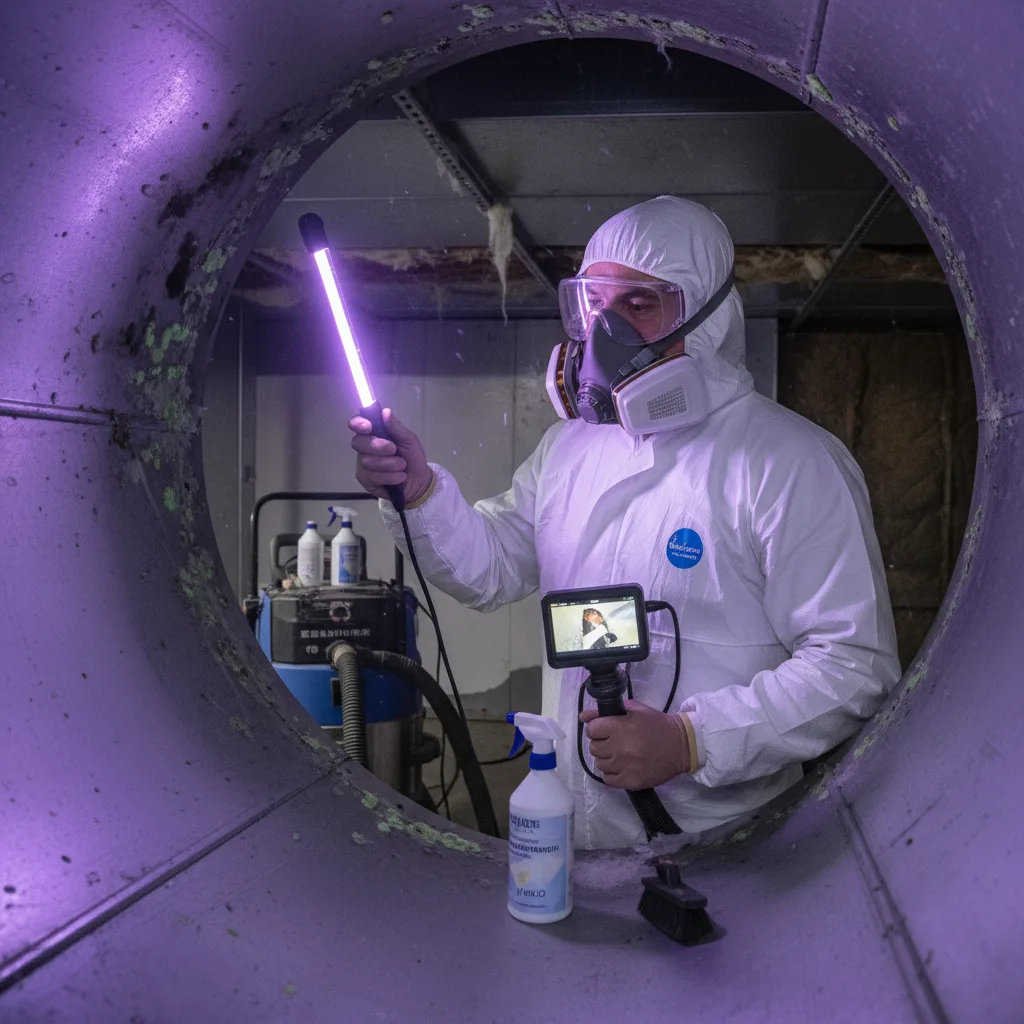
Air duct cleaning can reduce allergy symptoms if your ducts contain dust, pet dander, mold spores, or pollen that gets recirculated through your home. However, the EPA states there is no evidence that routine duct cleaning prevents health problems in homes without visible contamination. The benefit is real only when there is documented contamination inside the ducts.
What the EPA Actually Says
The U.S. Environmental Protection Agency is the most authoritative source on indoor air quality, and their guidance on duct cleaning is surprisingly candid. Their official position is worth quoting directly:
EPA official statement: "Duct cleaning has never been shown to actually prevent health problems. Neither do studies conclusively demonstrate that particle (e.g., dust) levels in homes increase because of dirty air ducts. This is because much of the dirt in air ducts adheres to duct surfaces and does not necessarily enter the living space."
That's a significant admission from the agency that regulates indoor air quality. The EPA does not recommend routine duct cleaning as a health intervention. However, they also acknowledge that cleaning can be warranted in specific circumstances, which we will cover below.
The challenge is that most duct cleaning companies heavily market to allergy and asthma sufferers, sometimes implying that dirty ducts are a primary cause of indoor health problems. That framing is not supported by the available research. The air circulating through your ducts picks up some settled dust, but modern duct systems with functioning filters are designed to capture most of that particulate before it reaches your living areas.
When Duct Cleaning Can Actually Help
There are specific, documented situations where cleaning ducts makes sense for health-focused reasons. These are different from the vague "your ducts are dirty" pitch you hear from salespeople.
Active Mold Growth Inside the Duct System
Mold in ductwork is a genuine health concern. If visible mold growth is confirmed inside your ducts, on duct surfaces, or in your air handler, cleaning and remediation are appropriate. Mold spores recirculating through your home can trigger asthma attacks and allergic reactions. The key word is "confirmed" — a technician who says your ducts "might have mold" without showing you evidence is not giving you a factual basis for cleaning.
Note that if mold is present, simply cleaning the ducts is often not enough. The moisture source that allowed mold to grow needs to be identified and corrected, or mold will return within months.
Heavy Pet Dander Accumulation
Pet dander is one of the most potent airborne allergens, and it does accumulate in ductwork over time. If you have multiple pets, particularly if you have moved into a home that previously had pets when you are allergic to animals, having the ducts cleaned and thoroughly vacuumed can meaningfully reduce the dander reservoir in your HVAC system. This is one area where cleaning has clearer logic even if large-scale studies are limited.
Post-Renovation Cleanup
Construction and renovation work generates enormous quantities of dust, drywall particles, insulation fibers, and other debris that can infiltrate ductwork if the system was not properly sealed during the project. If you've had major work done and the HVAC system was running during renovation, duct cleaning is a reasonable step before resuming normal use. This is also important if the renovation disturbed old materials that might contain lead paint or asbestos particles.
Rodent or Pest Infestation
If rodents or insects have been living in your ductwork, their droppings and dander are potent allergens. Professional cleaning following confirmed pest activity is well-justified on health grounds.
New Home With Unknown History
When you move into a home and don't know the duct cleaning history, occupancy patterns, or whether pets were present, a one-time cleaning at move-in is a reasonable precaution. See our guide on air duct cleaning before moving in for more detail.
When Duct Cleaning Probably Won't Help
Being honest about the limitations is just as important as knowing when cleaning helps.
General Allergy Management
If your allergies are triggered by pollen, dust mites, or pet dander that enters your home through normal daily activity, cleaning your ducts once is unlikely to provide lasting relief. The ducts will begin accumulating dust again immediately after cleaning. The ongoing source of allergens — pets, outdoor air, carpets, bedding — is not addressed by duct cleaning.
Asthma Triggered by Outdoor Pollutants
If your asthma is primarily triggered by outdoor air quality, ozone, smoke, or other pollutants that enter with outdoor air, duct cleaning does nothing to address the source. Better air sealing, quality filtration, and air purifiers are more appropriate tools.
Lightly Used Systems in Newer Homes
A duct system in a newer home with regular filter changes, no pets, and no recent renovation is unlikely to have accumulated enough debris to impact air quality. Cleaning in this scenario is mostly an expense without a measurable health benefit.
What Actually Works: Evidence-Backed Alternatives
If you're managing asthma or allergies, these interventions have stronger evidence behind them than duct cleaning alone.
Upgrade to MERV 13 Filters
Your HVAC filter is your first line of defense. Most homes use MERV 8 filters, which capture about 70% of particles in the 3-10 micron range. MERV 13 filters capture over 85% of particles down to 1 micron, including most pet dander, mold spores, and dust mite debris. They cost $15-25 each and should be changed every 60-90 days. This single change does more for ongoing air quality than a one-time duct cleaning.
Check compatibility with your system first — some older HVAC systems are not designed for the higher static pressure of MERV 13 filters. Your HVAC technician can advise.
Add a Standalone HEPA Air Purifier
HEPA filters capture 99.97% of particles 0.3 microns and larger. A properly sized HEPA air purifier in your bedroom makes a measurable difference for allergy and asthma sufferers, since we spend roughly a third of our lives there. Look for units sized for your room square footage with a clean air delivery rate (CADR) appropriate to the space.
Control Humidity
Dust mites thrive at humidity levels above 50%. Maintaining indoor relative humidity between 35-50% significantly reduces dust mite populations, which are a major asthma and allergy trigger. A whole-home dehumidifier or portable units in bedrooms can help during humid seasons.
Seal Duct Leaks
Leaky ducts in unconditioned spaces like attics and crawlspaces pull unfiltered air into your system, bypassing your filters entirely. This is a common and underappreciated source of indoor pollutants. A professional duct sealing service or even aerosol-based duct sealing (Aeroseal) can significantly improve filtration effectiveness. Use our cost calculator to get a sense of what this might cost in your area.
Reduce Source Pollutants
The most effective allergy intervention is reducing the amount of allergen entering your home and living spaces. This includes: HEPA vacuuming twice weekly, keeping pets out of bedrooms, washing bedding in hot water weekly, using allergen-barrier mattress and pillow covers, and removing carpeting in favor of hard floors where possible.
Red Flags From Overclaiming Companies
The duct cleaning industry, unfortunately, has a subset of operators who make unsupported health claims to drive sales. Watch for these warning signs:
| What They Say | Why It's a Red Flag |
|---|---|
| "Dirty ducts are making your family sick" | No evidence supports this as a general claim without specific findings |
| "We can cure your asthma with duct cleaning" | No cleaning service can cure asthma — this is deceptive marketing |
| "Your ducts are 80% clogged" (without showing you) | Technicians should show you before/after photos as documentation |
| Quoting $49 then finding hundreds of dollars in "problems" | Classic bait-and-switch common in this industry |
| "We'll apply antimicrobial coating to prevent mold" | EPA has not approved most duct sanitizers for use in occupied homes |
| Refusing to provide before/after documentation | Legitimate contractors document their work with photos or video |
Read our full guide on air duct cleaning scams if you're evaluating contractors.
Making the Right Decision for Your Situation
Here is a practical framework for deciding whether duct cleaning makes sense for you as an allergy or asthma sufferer:
- Do you have a confirmed trigger? Visible mold, known pet dander accumulation, recent renovation, or pest activity are legitimate reasons to clean.
- Have you optimized your filter? Before spending $300-500 on duct cleaning, upgrade to MERV 13 filters if your system supports them. This is a better first step.
- Is your system overdue? If your ducts have never been cleaned and you've lived in the home for 5+ years with pets, a one-time cleaning is reasonable even without a specific trigger.
- Are you using HEPA filtration elsewhere? Bedroom air purifiers often provide more targeted relief than whole-home duct cleaning.
Bottom line: Air duct cleaning can be one component of an indoor air quality improvement plan, but it is rarely the most important component. For asthma and allergy management, MERV 13 filters, HEPA purifiers, and allergen source reduction have stronger evidence. Cleaning makes the most sense when there is a specific reason to believe contaminants have built up in your system.
Get Accurate Quotes From Local Pros
Connect with certified contractors who will show you before and after documentation. Free, no-obligation quotes.
🏢 Are You an HVAC or Duct Cleaning Contractor?
Build trust with allergy and asthma patients by documenting your work with before/after photos and following EPA guidelines. Use GoHighLevel to automate follow-ups and build a referral base.
GoHighLevel for HVAC Businesses →